
If you’ve ever had a Japanese meal and wondered why it feels so complete — a bowl of rice, a small bowl of soup, a main thing and a couple of little dishes, all at once — the answer has a name. Ichiju sansai (one soup, three sides) is the traditional structure of a Japanese home meal. Not a recipe, not a set menu — a template: one soup, three side dishes, plus rice as the constant. Learn the template once and you can build a satisfying Japanese-style dinner out of anything in the fridge.
In Japan, dinner is not one dish done heroically. It’s several small things that sit together on the table and get eaten in turns — a bite of fish, a spoonful of the braised vegetable, a mouthful of rice, a sip of soup. That rhythm is the whole point. Ichiju sansai gives the meal a shape, which is exactly the part most of us miss when we try Japanese food at home and end up with a single big bowl of noodles.
What “one soup, three sides” actually means
Let’s take the name apart, because the structure is simpler than it sounds.
- Ichiju (一汁) — one soup. Typically a light broth: miso soup in the morning or at dinner, or a clear suimono broth. It’s the warm, comforting element that ties the meal together.
- Sansai (三菜) — three sides. In the classic home version these are the main dish (protein: fish, chicken, egg, tofu) plus two smaller vegetable or pickle dishes. In formal kaiseki it gets much grander, but for everyday eating the “three” is a guideline, not a law.
Shokuji — the rice — is the quiet centre. In traditional Japanese cooking rice is served with the meal, never under it, and it’s usually the plainest thing on the table: just steamed white rice, because it’s the base everything else is enjoyed against.
What this means for your table is that you don’t need to cook three elaborate dishes. You need one decent protein, one vegetable you didn’t overthink, something pickled or sharp, and a soup. That’s a meal.
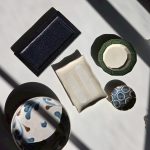
The bowls and plates you build it on
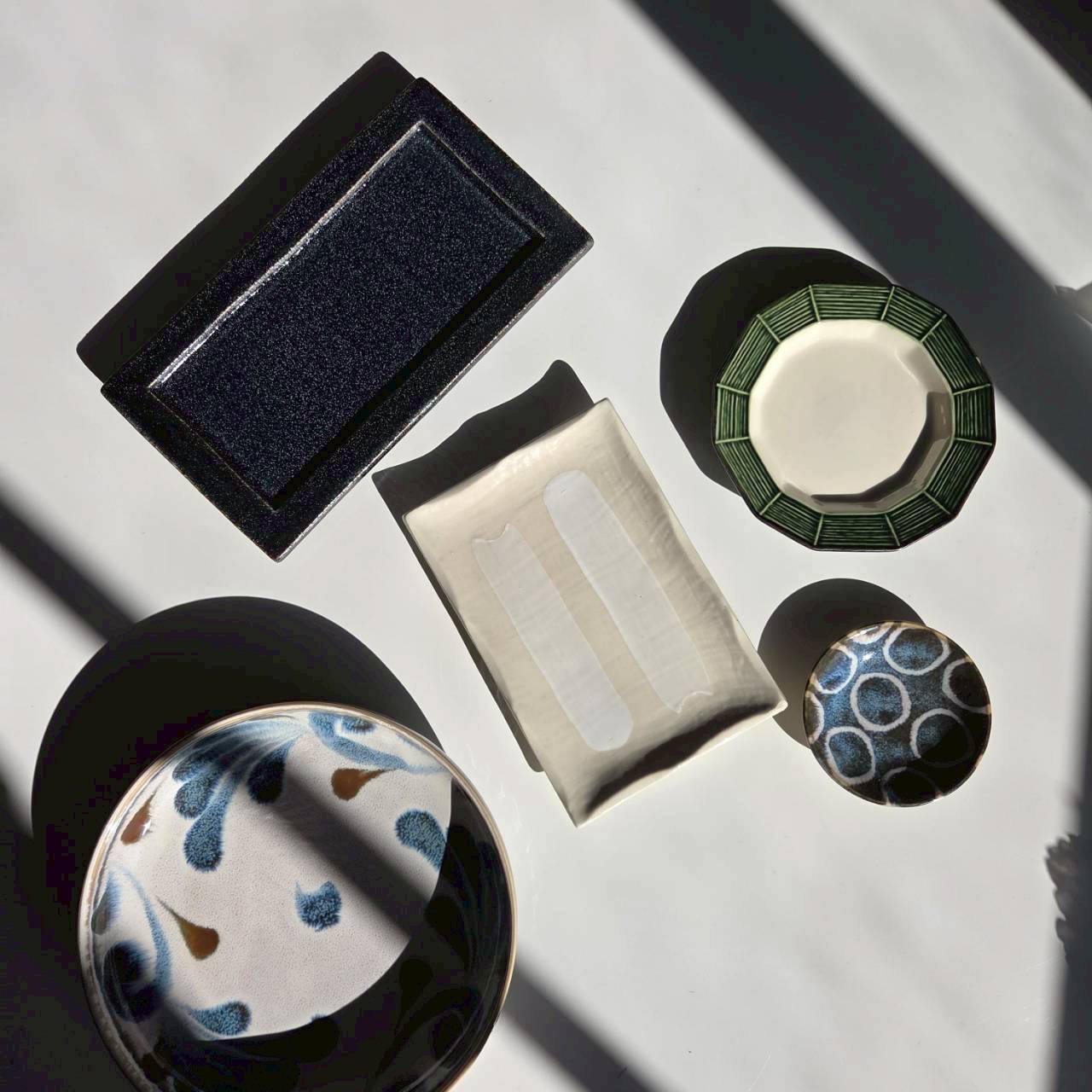
The beauty of ichiju sansai is that it assigns each dish a piece of tableware, and that’s where Japanese ceramics shine. Once you match the food to the right bowl, a plain weeknight meal starts to look like it was planned.
The rice bowl — chawan. The place your rice sits. It’s a small, low bowl, sized to sit in one hand, and deliberately plain in most homes because it’s used every single day and a busy glaze gets old fast. It doesn’t clip to the rest of the set; it’s a character all of its own. Our Rice Bowl | Chawan is a matte blue-grey porcelain bowl about 12cm wide, $12.99 — the kind you reach for without thinking once it’s on the table.
The soup bowl — shiruwan. Hands must be able to hold it and (traditionally) lift it to the mouth, so it’s taller than the rice bowl with a rim you can drink from. For real miso mornings, a Miso Soup Bowl | Shiruwan at $7.99 is the everyday workhorse.
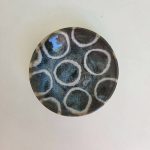
The main plate. This is where the protein and vegetables make their first impression, so it deserves the biggest plate on the table — an ōzara (large plate) or, for a home serve, a medium chūzara. A 20cm plate like the Villa Plate | Chūzara in Seto ware blue, $21.99, gives the main dish room to breathe without overwhelming the table.
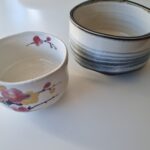
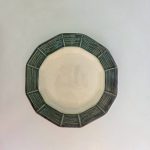
The small plates — kozara and mamezara. Two of your “three sides” are often small enough to live on a little plate. A kozara (side plate) holds appetisers and desserts; a mamezara — the name literally means “bean plate” — is the tiny dish that holds pickles, a dipping sauce, or that blob of salt for a piece of tomato. The Flower Side Plate | Kozara at $11.99 and the Sakura Bean Bowl | Mamezara at $7.99 cover both ends, and small plates are the friendliest way to start collecting Japanese tableware because they cost little and add a lot.
The chopstick rest — hashi oki. Not required, but it’s the detail that makes a Japanese-set table read as a whole. A tiny rest for the chopsticks — like the Fuji Chopstick Rest | Hashi Oki at $8.99 — is the traditional gesture of setting the table properly.
You don’t need all of these to eat an ichiju sansai meal — you need the rice bowl and the soup bowl, and a plate to hold the main thing. The small plates and the rest are what turn it from two bowls of dinner into a table that feels Japanese.
A sample meal to make it concrete
Here’s a winter-friendly weeknight version, all cooked in about 30 minutes:
1. Soup: miso soup with tofu and a handful of sliced spring onion. 2. Main: a piece of pan-seared fish, or teriyaki chicken, or a fried egg if you want it dead simple — served on the plate with a small mountain of steamed greens beside it. 3. Side one: a simple dressed vegetable — cucumber with a splash of rice vinegar and sesame, coleslaw, or blanched broccoli with a little soy. 4. Side two: pickles — a store-bought Japanese pickle, or kimchi, or just some quick-pickled cucumber. 5. Rice: a bowl of steamed short-grain rice alongside, not under.
Set it all on the table at once and eat in turns. The rice and soup go in front of you, the sides fill the spaces, and the meal assembles itself. For a NZ twist, the greens work brilliantly with local broccoli or snow peas, and lamb — though not traditional — is genuinely at home on the flat side of a ko zara with a good plum or soy glaze.
Why this beats “just cook a big bowl”
Cooking one big dish is faster, but ichiju sansai buys something back: balance by default. Because the template forces a little bit of everything — something warm, something savoury, something fresh, something pickled — you get a meal that’s varied without planning. The pickled element alone, which most of us never think to include, is what stops a home Japanese meal from tasting samey.
It’s also a genuinely low-effort way to cook more Japanese food at home. Once the structure is in your head you stop searching for “a Japanese recipe” and start building meals from what you have — a fillet, a cabbage, some rice and a packet of miso gets you 90 percent of the way there.
Ichiju sansai doesn’t need special skills or special tools. It needs the right small set of bowls and plates, a bit of broth, and the willingness to serve your dinner in pieces rather than one lump. That’s a habit, not a craft — and the table you build it on doesn’t hurt.
If you’re starting from nothing, pick up a Rice Bowl, a Miso Soup Bowl and one small plate, and you can run the template tonight.